

 by Admin














LATEST POST
Understanding Atoms and Elements The Foundation of Chemistry
Chemistry explores the composition and characteristics of matter, how its particles are arranged, and the various transformations substances experience. At the heart of this fascinating subject are atoms and elements. Understanding these basic concepts helps students build a strong foundation for advanced topics such as chemical bonding, reactions, periodic classification, and organic chemistry. With proper guidance from a skilled chemistry sir, students can understand these concepts more clearly and develop confidence in solving chemistry problems.
What Is an Atom?
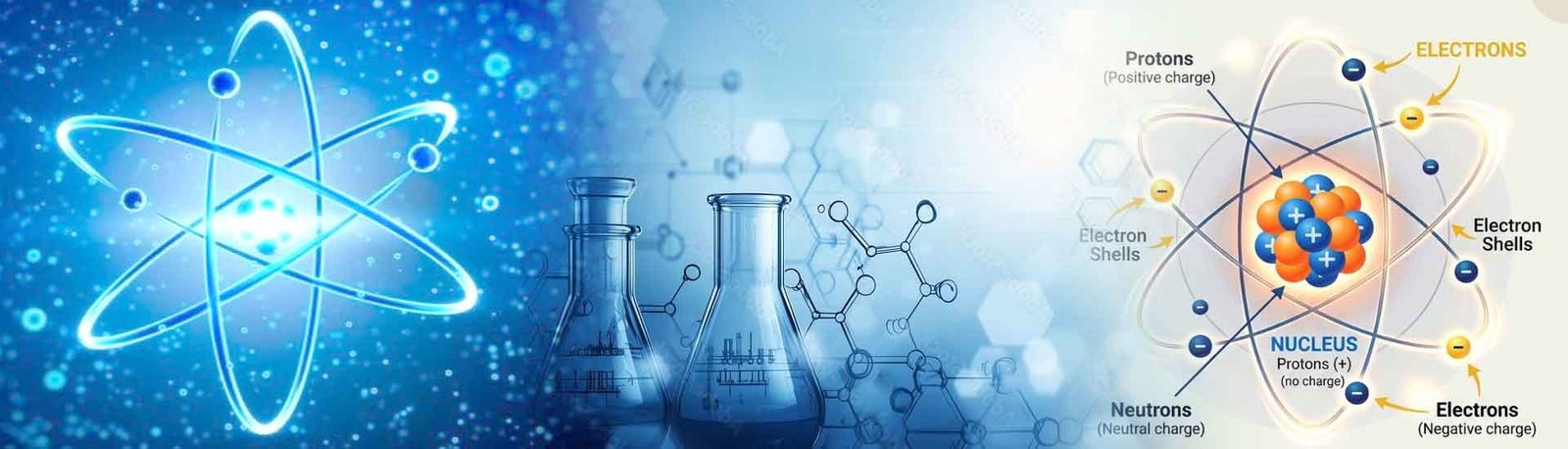
An atom is the smallest unit of an element that retains the chemical properties of that element. Every atom contains three primary subatomic particles: protons, neutrons, and electrons. Protons carry a positive charge, electrons carry a negative charge, while neutrons have no electrical charge.
The arrangement of these particles determines the behaviour and properties of different atoms. The number of protons in an atom is known as its atomic number, which identifies the element. For example, every carbon atom contains six protons, while oxygen contains eight.
What Are Elements?
An element is a fundamental form of matter made up of atoms that contain an identical number of protons. Each element has its own unique chemical symbol and is systematically arranged in the periodic table based on its characteristics and atomic structure. Hydrogen, oxygen, carbon, sodium, and iron are a few commonly known examples of elements.
Learning about elements helps students understand how substances interact and form compounds. The periodic table also provides valuable information about atomic structure, chemical properties, and trends among elements.
Why Are Atoms and Elements Important in Chemistry?
Atoms and elements form the foundation for understanding almost every chemistry topic. Concepts such as chemical bonding, molecular structure, reactions, acids and bases, and organic chemistry are connected to atomic behaviour.
For students preparing for higher secondary examinations, developing conceptual clarity at an early stage can make complex chapters easier to understand. Students looking for a Chemistry Tuition institute in Kolkata can benefit from structured lessons that explain these fundamentals with examples, diagrams, and problem-solving practice.
Building Strong Chemistry Concepts
A skilled chemistry teacher can simplify complex topics by explaining concepts clearly and following an organized teaching method. For students in Classes 11 and 12, Chemistry Tuition offers valuable academic guidance through concept building, timely revision, doubt-solving support, regular practice, and focused preparation for school and board examinations.
Choosing the right learning environment can make chemistry more interesting and manageable. A reputed Chemistry Tuition institute in Kolkata can offer systematic lessons, doubt-clearing sessions, practice questions, and exam-oriented preparation. Students looking for Chemistry Tuition for JEE & NEET can also benefit from focused guidance that combines conceptual learning with problem-solving practice.
Choosing the right learning environment is equally important. If you are considering tuition options, read our previous blog, How to Choose the Best Chemistry Tuition for Your Child, to understand some useful factors to consider before making a decision.
Students searching for a Chemistry Tuition institute in Behala can look for experienced teachers, clear explanations, regular assessments, and a learning approach suited to their academic goals.
Conclusion
Atoms and elements form the foundation of chemistry. Once students develop a clear idea of atomic structure and the properties of elements, many advanced concepts become easier to approach. With consistent study, practical examples, and proper academic guidance, students can build confidence and improve their chemistry performance.
FAQs
- What is an atom?
An atom is the smallest unit of an element that retains its chemical characteristics. It consists of protons, neutrons, and electrons. - What is an element?
An element is a pure substance made up of atoms having the same number of protons. - Why are atoms important in chemistry?
Atoms form the basic units of matter and help explain chemical bonding, reactions, compounds, and the properties of substances. - What should students look for in a Chemistry Tuition institute in Kolkata?
Students should consider experienced teachers, conceptual teaching methods, regular tests, doubt-clearing support, study materials, and preparation aligned with their academic goals. - Can chemistry tuition help with JEE and NEET preparation?
Yes. Specialized Chemistry Tuition for JEE & NEET can combine conceptual learning with numerical problems, application-based questions, and exam-oriented practice.
ABOUT COMPANY
At Sudarshan Chemistry, we are dedicated to simplifying the complexities of chemistry and making learning an enjoyable journey for every student. Whether you're preparing for board exams, competitive entrance tests, or simply want to strengthen your foundation in chemistry, you've come to the right place. Our expert-led guidance, well-structured study materials, and conceptual teaching methods are designed to help students not just memorize, but truly understand and apply the principles of chemistry. We believe in nurturing curiosity, encouraging analytical thinking, and building confidence in every learner.